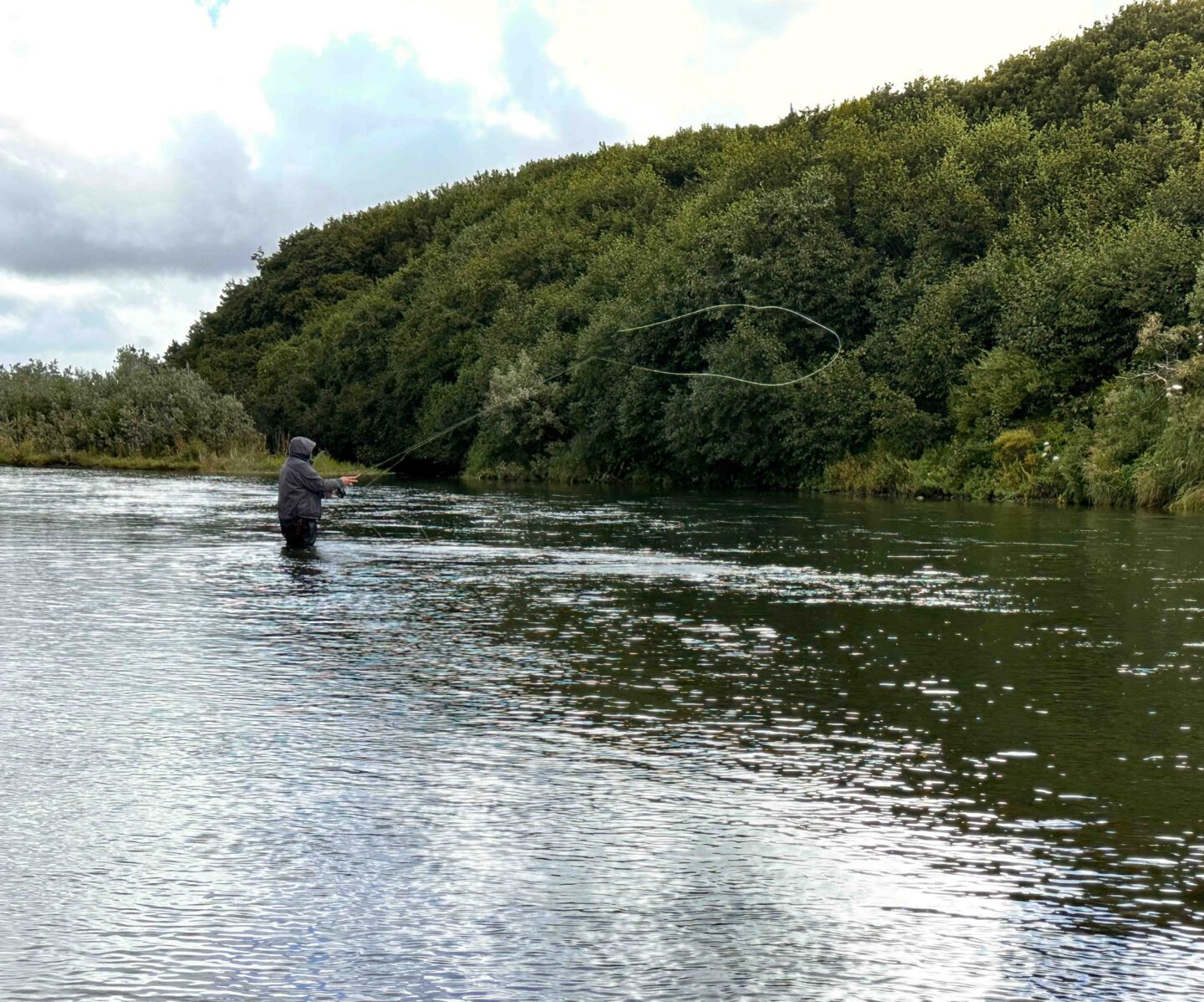
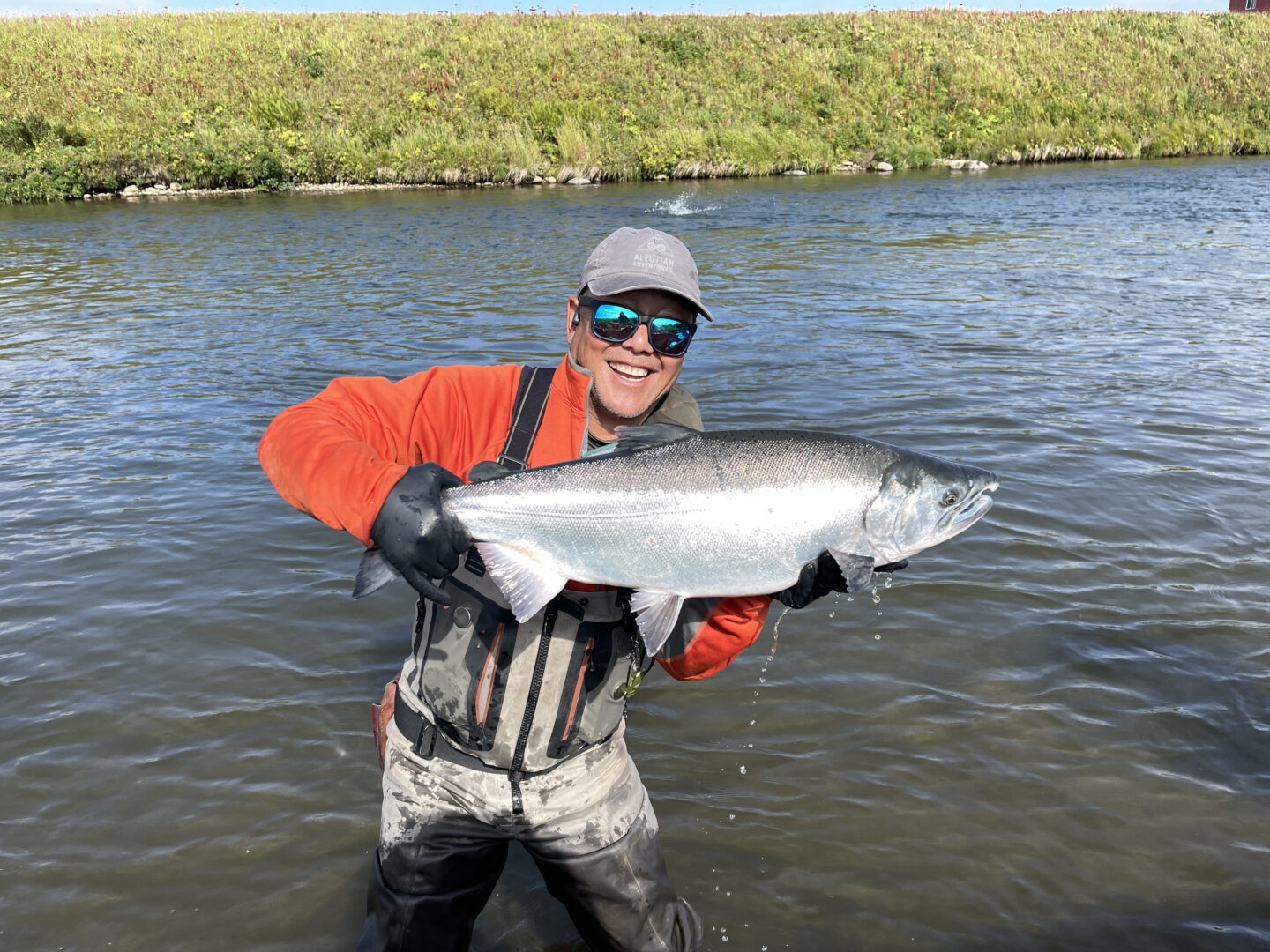
Five Mistakes Silver Salmon Anglers Make (and How to Avoid Them)
August 25, 2026
Simple adjustments that will help you cover more water, move more fish, and hook more Alaska Peninsula coho.
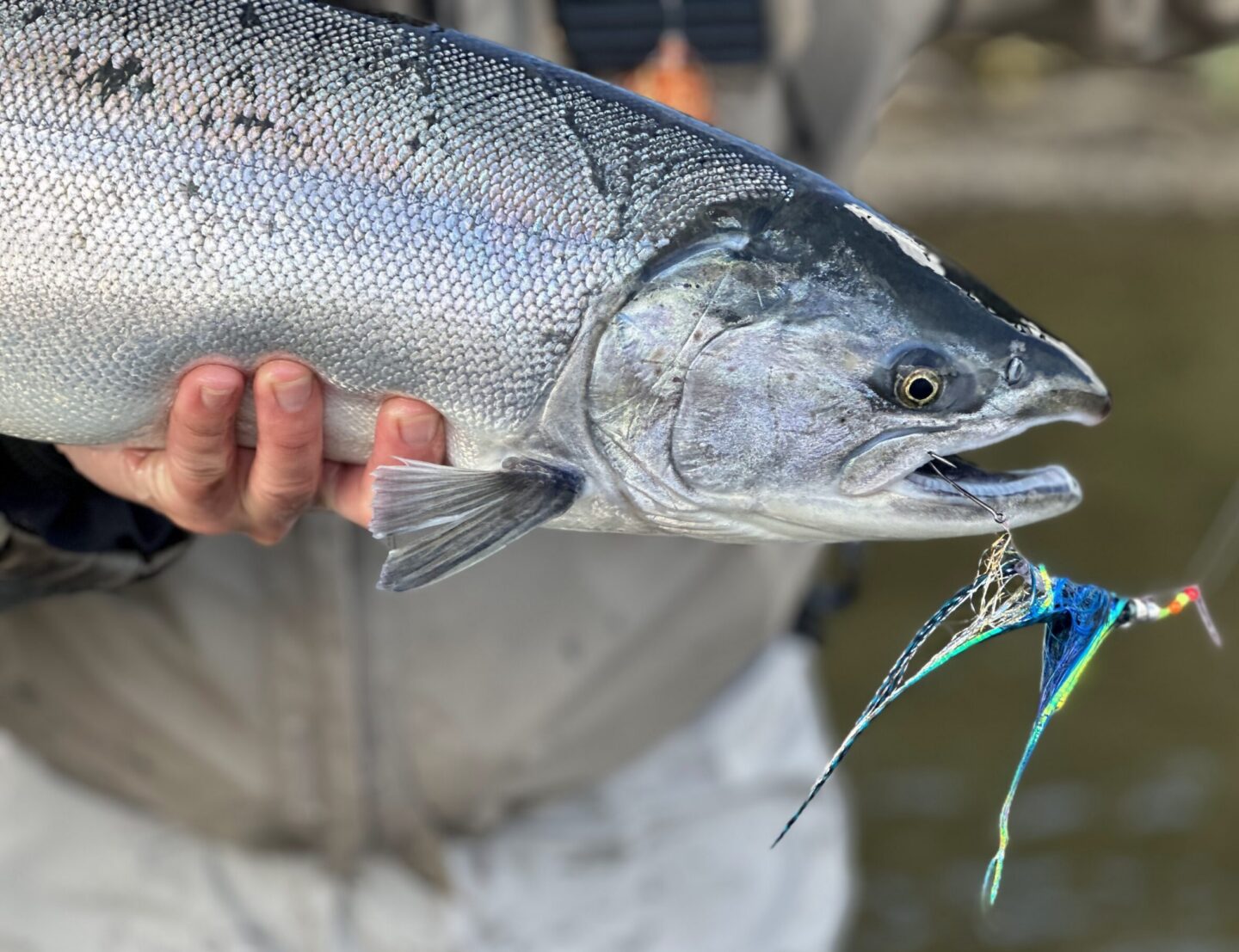
Silver salmon have earned a reputation for being among the most aggressive game fish in Alaska—and for good reason. They’re powerful, curious, and often willing to chase a fly. But despite their aggressive nature, consistently hooking coho isn’t simply a matter of tying on a pink fly and casting.
From late August through September, our guides at Sapsuk River Camp spend long days on the water with anglers of every experience level. While every guest fishes a little differently, we see many of the same habits repeated throughout the season. The encouraging part? Most are easy to correct, and a few small adjustments can dramatically improve your success.
Here are five of the most common mistakes we see—and how to avoid them.
Mistake 1
Fishing Too Fast
One of the biggest misconceptions about silver salmon is that your fly needs to race through the water.
While there are certainly times when an aggressive strip triggers explosive eats, many coho are surprisingly willing to intercept a fly that swings naturally across the current. A controlled presentation often gives fish more time to track, inspect, and ultimately commit.
Our guides frequently remind anglers to slow down. Let your fly swing. Allow it to pause briefly at the end of each cast before stripping in or making another presentation.
You might be surprised how many grabs happen during that brief pause.
Guide Tip: Before changing flies, experiment with slowing your presentation. Often, speed—not the fly—is the difference.
Mistake 2
Changing Flies Too Often
After fifteen or twenty casts without a fish, it’s tempting to start cycling through every fly in your box.
We’ve all done it.
In reality, presentation is usually a much bigger factor than pattern selection.
Instead of immediately switching flies, consider changing:
Your casting angle
Fly depth
Swing speed
Mend placement
Position within the run
Our guides almost always work through these adjustments before recommending a different fly.
A well-presented confidence fly consistently outfishes a dozen flies that never spend enough time in the water.
Guide Tip: Trust your fly. Focus on how you're fishing it before reaching for another pattern.
Mistake 3
Casting Too Far
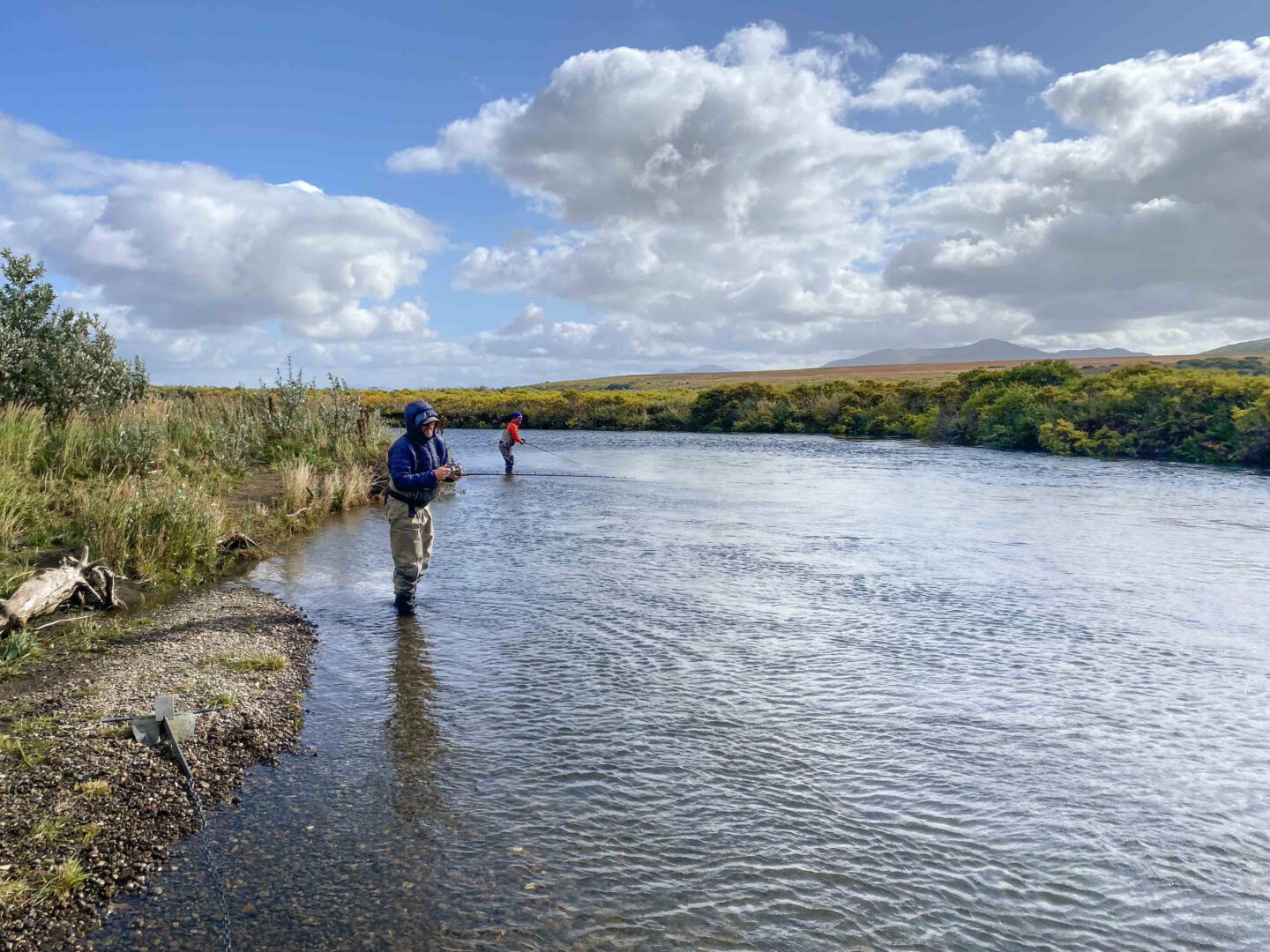
Many anglers step into a run and immediately fire their longest cast toward the opposite bank.
The problem?
They skip the water closest to them.
Fresh silver salmon frequently travel surprisingly close to shore, especially along soft edges, inside seams, and subtle current breaks. By beginning with shorter casts and gradually working farther across the river, you’ll effectively cover every piece of fishable water.
It’s a simple adjustment that often results in more opportunities.
Guide Tip: Your first cast should usually be your shortest. Fish the near water before reaching for the far bank.
Mistake 4
Standing in One Place
One perfect cast won’t cover an entire run.
Silver salmon are constantly moving, and they won’t always be holding directly in front of you. The anglers who consistently find success aren’t necessarily better casters—they simply show their fly to more fish.
Make two or three quality casts.
Take a few steps downstream.
Repeat.
By steadily working through the run, you’ll maximize the amount of water you cover throughout the day.
When both anglers work methodically down a run, varying flies, depth, and swing speed, guides quickly identify patterns that benefit everyone.
Guide Tip: Covering water catches fish. Keep moving.
Mistake 5
Failing to Adapt to Changing Conditions
The river you fish at eight o’clock in the morning may look very different by mid-afternoon.
Cloud cover changes. Water levels fluctuate. Light conditions shift. Fresh fish enter the system.
Successful anglers recognize these subtle changes and make small adjustments throughout the day.
Sometimes it’s adding a little weight. Sometimes it’s slowing the swing. Sometimes it’s switching from a bright pink fly to a darker profile.
The best anglers—and the best guides—are constantly paying attention and making thoughtful adjustments.
Guide Tip: Stay flexible. Small changes often produce the biggest results.
The Bottom Line
The biggest improvements in silver salmon fishing rarely come from buying more gear or carrying a larger fly box. They come from fishing smarter.
Slow down your presentation.
Cover every inch of the run.
Trust your confidence flies.
Keep moving.
Pay attention to changing conditions.
These simple habits will help you show your fly to more fish, generate more grabs, and ultimately become a more effective angler.
At Sapsuk River Camp, our guides spend every day helping guests refine these techniques. By the end of the week, most anglers leave with far more than memorable fish—they leave with a better understanding of how to consistently fish for silver salmon wherever they travel next.